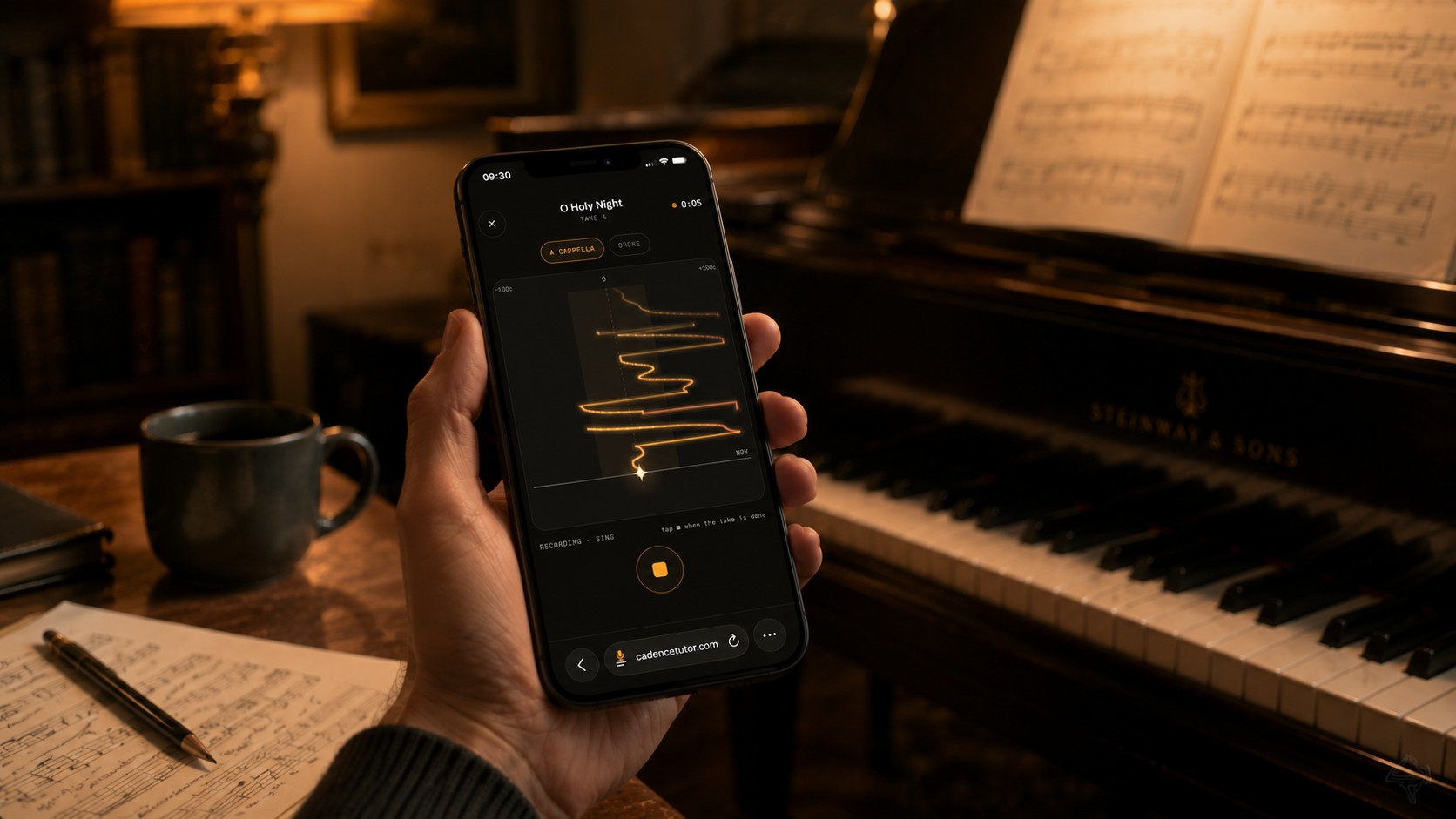
Singers cannot hear their own pitch accurately while they are producing it. That is not a lack of talent, it is physics — your own skull is the worst seat in the house. Most learn-to-sing apps answer this by handing you a curriculum and gamifying the basics.
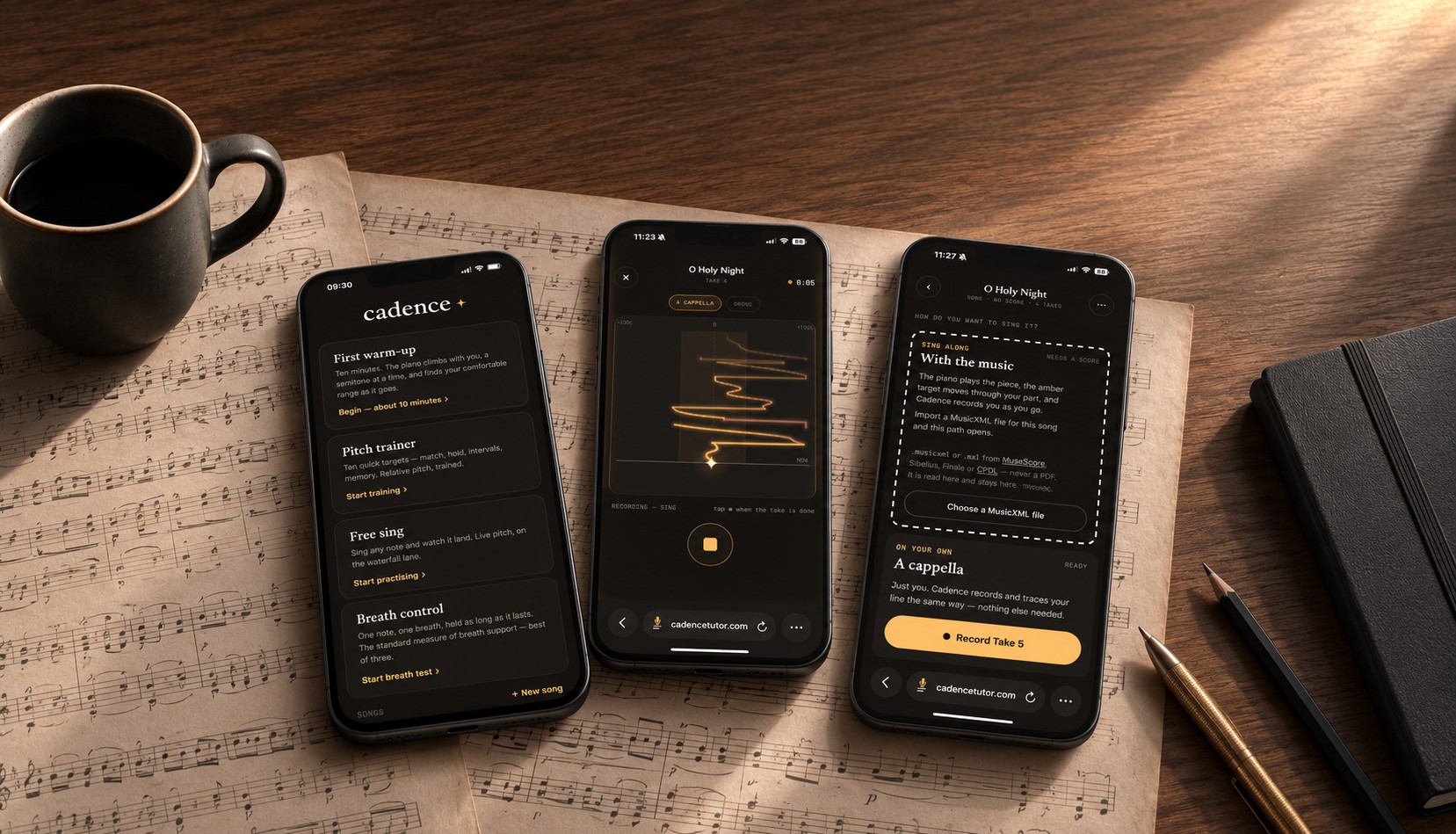
Cadence does something narrower and more useful: it measures. A live waterfall trace shows each note landing as you sing it, the same analysis runs on every take so progress is real rather than remembered, and a short written report afterwards says what improved and what to try next. Built for our own choir first, and now open to anyone — starting with a free vocal range test that needs no account.
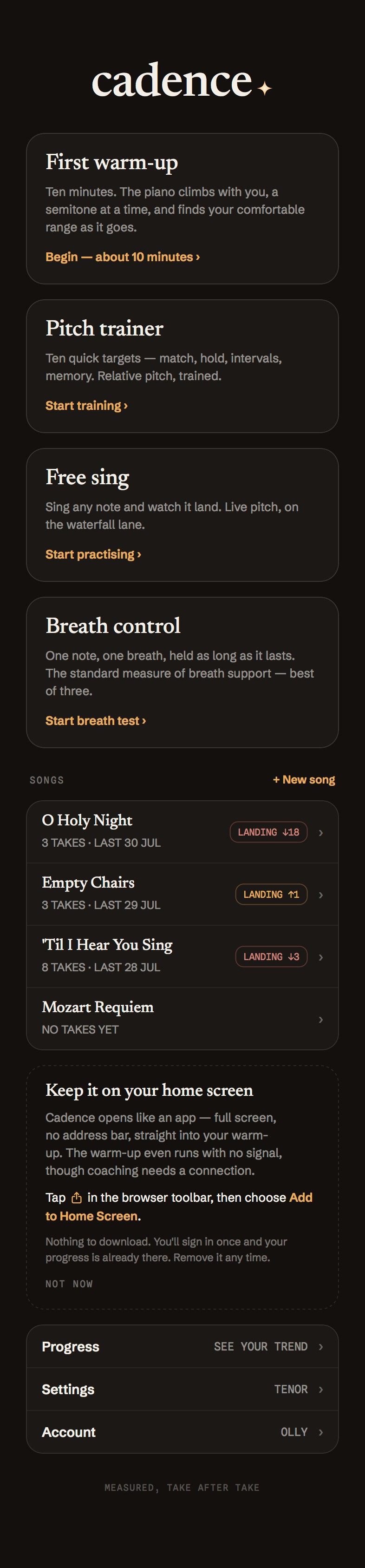
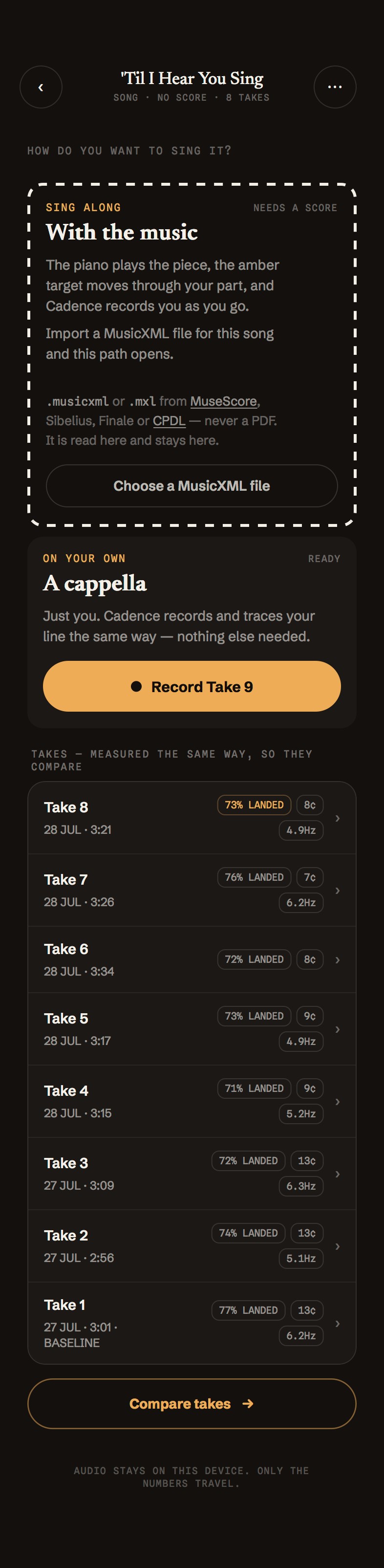
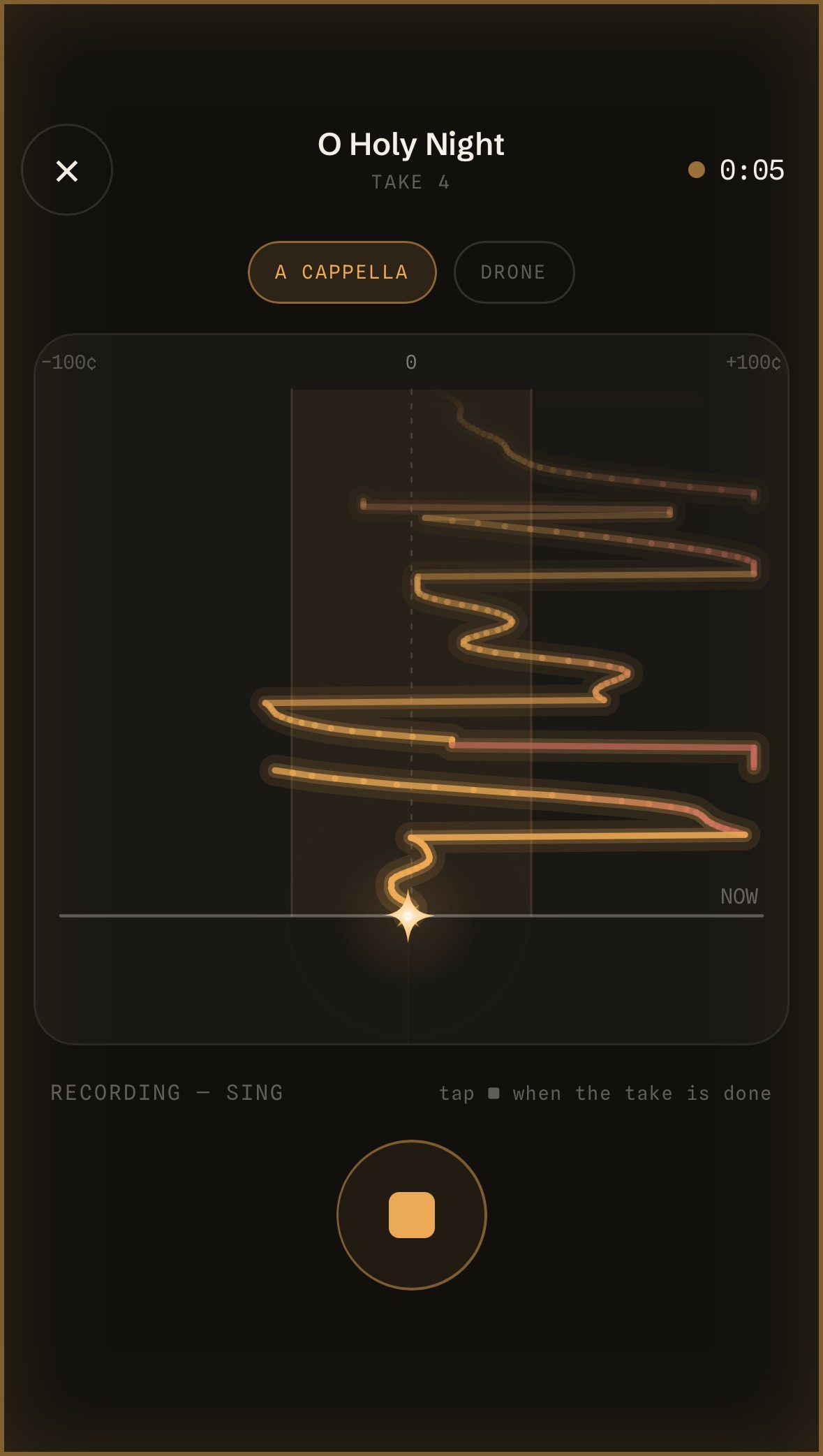
The subject is precise, so the interface had to be. We built a stage-dark skin — the colours of a rehearsal room at night — and made position the primary signal rather than colour: a note reads as sharp or flat by where it sits, so the trace still makes sense in greyscale. Amber marks the voice and where it lands; a single ember tone is reserved for scoops and errors, and nothing else.
Newsreader carries the note names and the wordmark, whose full stop is the four-point star; Schibsted Grotesk handles the interface and Spline Sans Mono the numbers. Underneath, every decision defers to trust: the pitch detection and recording run entirely in the browser, the analysis pipeline is frozen and versioned so takes stay comparable for years, and a singer's audio never leaves their phone. Only the numbers travel.